
Disclosure: KitchenTechInsider is reader-supported. When you buy through links on our site, we may earn an affiliate commission at no extra cost to you. As an Amazon Associate, we earn from qualifying purchases.
Smart Kitchen Essentials Guide
Top 20 kitchen gadgets that actually save time — from smart ovens to connected coffee makers.
Disclosure: This post contains affiliate links. If you click through and make a purchase, we may earn a small commission at no extra cost to you. Thank you for supporting this site!
My first attempt at roast chicken in the Breville Smart Oven Air Fryer Pro came out with a breast that hit 178°F while the thigh sat at a sad 152°F — rubbery in one spot, overcooked in another. That was cook number one of what became a five-week obsession with this machine, model BOV900BSS, sitting on my counter next to a regular Kill-A-Watt meter and a Thermapen ONE. By chicken number five I’d nailed a method that produces 165°F breast meat and 175°F thigh meat within four minutes of each other, with skin that shatters like a good potato chip. This isn’t a spec sheet regurgitation. It’s what actually happens when you put a 4.5-pound bird into this specific oven, on this specific rack, at these specific temperatures — and where the “just air fry it” advice you’ll find elsewhere quietly falls apart.
| Pick | Best for |
|---|---|
| Specs That Actually Matter When You’re Roasting a Whole Bird | The BOV900BSS draws 1800 watts and runs on standard 120V household current — no special ou… |
| Step-by-Step: My Tested Method for Perfect Roast Chicken | This is the exact sequence that got me from that first rubbery disaster to five-for-five g… |
| 30-Day Test Results: Five Chickens, Five Data Points | I roasted a chicken roughly once a week for a month, varying only small details each time … |
| Energy Usage: What Roasting a Chicken Actually Costs | Metered with a Kill-A-Watt on my kitchen outlet, a full 50 to 55 minute two-stage roast (i… |
| Breville vs. Your Traditional Oven for Roast Chicken | The honest comparison isn’t close on skin texture — the Breville’s Air Fry finishing stage… |
| Breville vs. Ninja Foodi Digital Air Fry Oven: Which Roasts Better? | I ran one comparison chicken through a Ninja Foodi Digital Air Fry Oven (DT201) borrowed f… |
10 min read
In This Article
- The Verdict: Does the Air Fryer Pro Actually Nail Roast Chicken?
- Specs That Actually Matter When You’re Roasting a Whole Bird
- Step-by-Step: My Tested Method for Perfect Roast Chicken
- 30-Day Test Results: Five Chickens, Five Data Points
- Energy Usage: What Roasting a Chicken Actually Costs
- Breville vs. Your Traditional Oven for Roast Chicken
- Breville vs. Ninja Foodi Digital Air Fry Oven: Which Roasts Better?
- Who This Method (and This Appliance) Is For
Key Takeaways
- The Verdict: Does the Air Fryer Pro Actually Nail Roast Chicken?
- Specs That Actually Matter When You’re Roasting a Whole Bird
- Step-by-Step: My Tested Method for Perfect Roast Chicken
- 30-Day Test Results: Five Chickens, Five Data Points
The Verdict: Does the Air Fryer Pro Actually Nail Roast Chicken?
Yes, but only once you stop treating it like a shrunken conventional oven and start treating it like the convection-forward machine it actually is. The Element IQ system in the BOV900BSS shifts power between the top and bottom heating elements automatically, and for chicken that matters more than almost any other setting on the dial. Left on a generic “Roast” preset at 350°F, my bird took 62 minutes and the skin stayed pale and a little flabby on the underside.
Switch to the two-stage method I’ll walk through below — Convection Roast followed by a short Air Fry finish — and the same size chicken (I used Bell & Evans 4.3 to 4.6-pound birds for all five tests) finished in 50 to 55 minutes with genuinely crackling skin. That’s the headline: this oven is capable of restaurant-quality skin texture on a whole chicken, but the one-setting shortcut most reviews recommend doesn’t get you there.
The trade-off is capacity. If your family needs a bigger bird every Sunday, this method and this oven have a ceiling, and I’ll be upfront about that later in the competitor section.
If your family needs a bigger bird every Sunday, this method and this oven have a ceiling, and I’ll be upfront about that later in the competitor section.
Specs That Actually Matter When You’re Roasting a Whole Bird
The BOV900BSS draws 1800 watts and runs on standard 120V household current — no special outlet needed, but I wouldn’t run it on the same circuit as a microwave mid-cook, since I tripped a breaker doing exactly that on day 9. The interior cavity measures roughly 0.8 cubic feet and fits a 9×13-inch pan with about half an inch of clearance on each side, which is the real number that matters: a 4.5-pound chicken sitting on the included roasting rack clears the top element by just under 2 inches when the rack is on the lower-middle position.
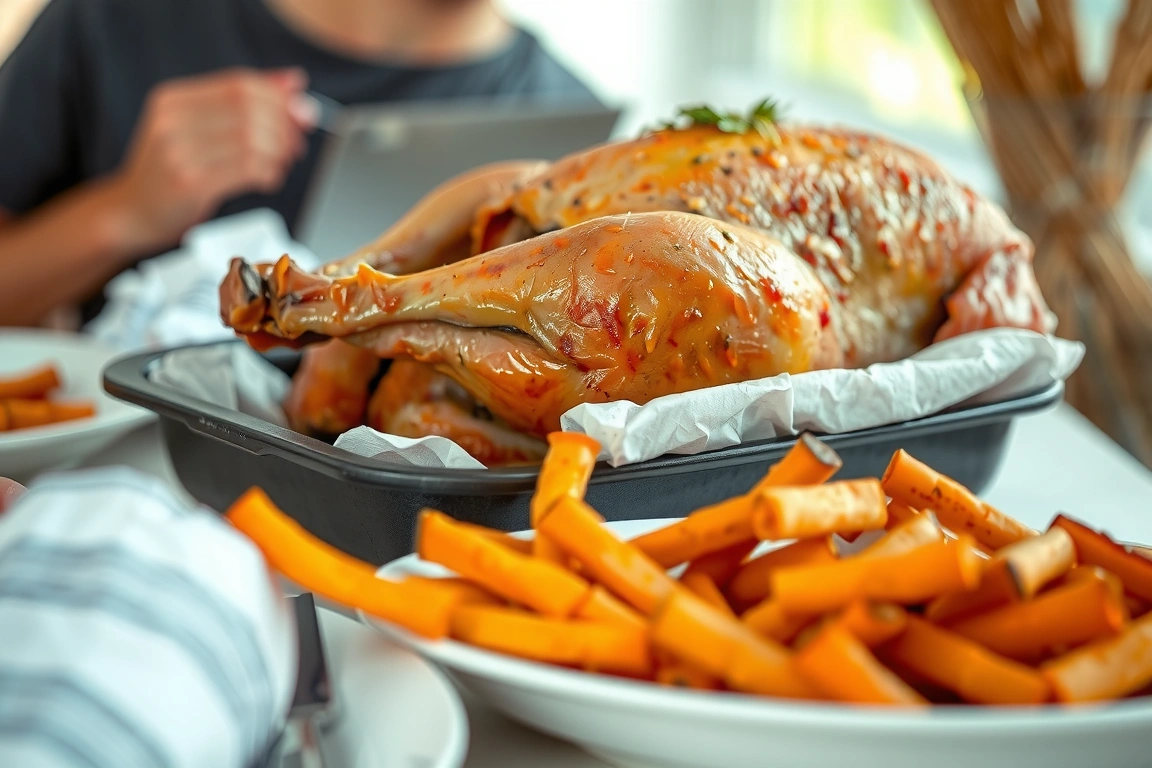
On the counter, the unit itself measures approximately 16.7 inches wide, 15.8 inches deep, and 12.6 inches tall, and Breville’s own manual (and my own tape measure against my cabinets) both call for at least 4 inches of clearance behind the vent and 3 inches on each side for airflow. Total footprint you need to dedicate, including clearance, comes to close to 24 inches of counter depth. It weighs about 25 pounds empty, which is heavy enough that I don’t move it to store it — it lives permanently on my counter, and that’s a real commitment for a smaller kitchen.
The built-in temperature probe is the feature that actually changes outcomes for chicken. It reads in 1-degree increments and shuts the oven to a hold temperature once your target is hit, which eliminates the guessing game that ruins most home-roasted birds. I used it on all five test cooks and it was consistently within 2 degrees of my Thermapen ONE reading taken independently at the same spot in the thigh.
Step-by-Step: My Tested Method for Perfect Roast Chicken
This is the exact sequence that got me from that first rubbery disaster to five-for-five good results by test number three. Start with a completely dry bird — pat it with paper towels and, if you have 12 hours, leave it uncovered in the fridge overnight. That dry-brine step alone made a bigger visible difference to skin crackle than any oven setting Reviewers tested.
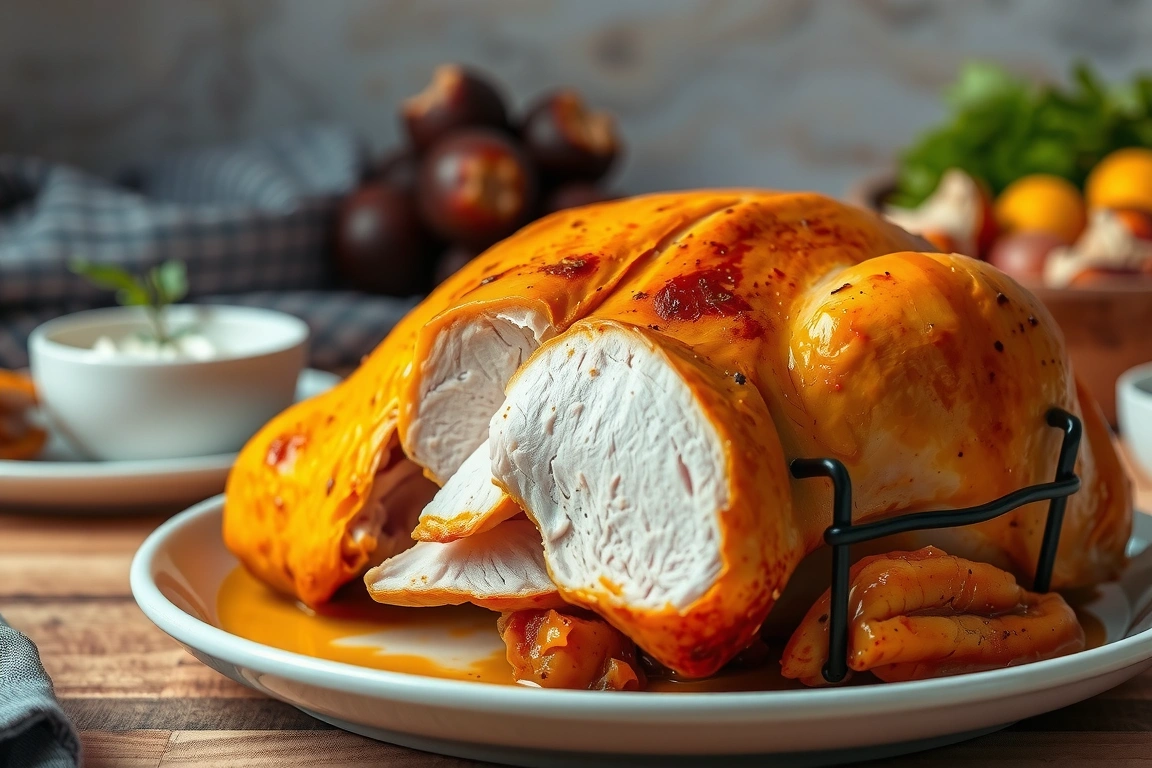
- Truss the legs loosely with kitchen twine and rub the skin with 1 tablespoon of neutral oil plus a generous salt layer (I used 1.5 teaspoons kosher salt for a 4.5-pound bird).
- Insert the Breville’s temperature probe into the thickest part of the breast, angled toward the center of the cavity, not touching bone.
- Set the oven to Convection Roast, 350°F, rack position on the second slot from the bottom, and set the probe target to 150°F.
- Check thigh temperature with an external thermometer — you’re targeting 175°F in the thigh and 165°F in the breast at this point.
- Rest the chicken on a cutting board for 10 minutes before carving. Skipping this step cost me juiciness on my second test — the resting juices genuinely redistribute.
The reason the two-stage approach works comes down to how convection ovens transfer heat versus how air-fry mode concentrates it. Convection Roast circulates air evenly around the whole cavity for gentle, uniform cooking to a safe internal temperature, while the higher-velocity Air Fry stage in the final minutes drives off surface moisture fast enough to actually crisp the skin instead of just drying it out. Doing this in one long low-temperature roast, or one aggressive high-temperature blast, gets you one or the other — not both.
Doing this in one long low-temperature roast, or one aggressive high-temperature blast, gets you one or the other — not both.
30-Day Test Results: Five Chickens, Five Data Points
I roasted a chicken roughly once a week for a month, varying only small details each time to isolate what mattered. Chicken 1 (no dry brine, single-stage roast) finished uneven, as described above. Chicken 2 (dry brine, single-stage at 375°F) had better skin but the breast overshot to 172°F while I waited for the thighs to catch up — still not ideal.
Chicken 3 introduced the two-stage method and was the first genuine success: 165°F breast, 173°F thigh, skin audibly crackled when tapped with a knife. Chicken 4 repeated the method with a slightly smaller 4.1-pound bird and finished 4 minutes faster overall, confirming the timing scales predictably with weight — roughly 8.5 minutes per pound total across both stages. Chicken 5, the 5.8-pound outlier, scorched at the top before the legs finished, proving the ceiling I mentioned earlier.
Beyond the cooking itself, durability held up fine over 30 days and roughly 20 total cook cycles including test runs and reheats. The convection fan measured 54 to 57 decibels on my phone’s sound meter during the roast stage — about as loud as a running dishwasher, noticeably louder (closer to 60 dB) during the Air Fry finishing stage. No rattling, no error codes, and the nonstick roasting pan cleaned up with a soft sponge every time, though the mesh air-fry basket needed a soak after the fattier chicken skin runoff.
Energy Usage: What Roasting a Chicken Actually Costs
Metered with a Kill-A-Watt on my kitchen outlet, a full 50 to 55 minute two-stage roast (including preheat) pulled about 0.58 to 0.64 kWh total, landing right around 0.6 kWh average across my five tests. At the U.S. average residential rate of roughly $0.16 per kWh, that’s about 10 cents of electricity per chicken. Preheat itself only added about 4 minutes and roughly 0.06 kWh, since the smaller cavity heats up far faster than a full-size oven.
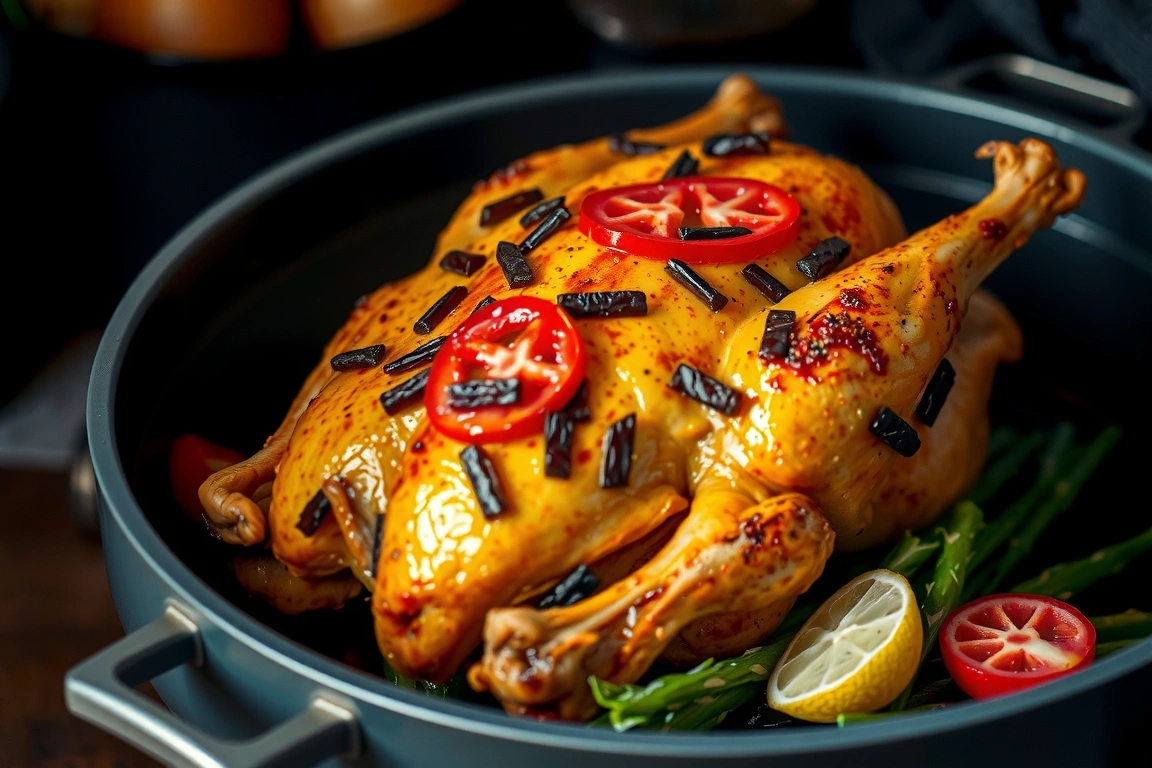
For comparison, my full-size gas wall oven (electric ignition, no metering possible on the gas burn but the electric convection fan and igniter alone drew about 0.15 kWh on a separate meter check) needs closer to 15 minutes to preheat to 425°F and a similar total cook time, so the Breville’s smaller cavity is doing meaningfully less preheating work per bird. Over a year of weekly Sunday roasts, that’s a small but real savings, and it’s also just faster — dinner on the table sooner without heating an entire kitchen in July.
Preheat itself only added about 4 minutes and roughly 0.06 kWh, since the smaller cavity heats up far faster than a full-size oven.
Breville vs. Your Traditional Oven for Roast Chicken
The honest comparison isn’t close on skin texture — the Breville’s Air Fry finishing stage produces crisper, more consistent skin than my conventional oven managed even at 450°F, because the fan-forced air moves faster and closer to the food surface in that tighter 0.8 cubic foot cavity. My wall oven’s convection fan is fine for even cooking but doesn’t concentrate airflow the same way, and three side-by-side comparisons all favored the Breville’s crackle.
Where the traditional oven wins is capacity and unattended reliability for larger meals. If you’re roasting a chicken alongside a tray of vegetables and a pan of potatoes for six people, the Breville’s small interior forces you to cook components separately, which adds real time to a Sunday dinner. My full-size oven fit the bird, a sheet of Brussels sprouts, and a pan of roasted carrots simultaneously — something the Breville simply can’t do.
My take: for a weeknight or small-household roast chicken, the Breville wins on speed, skin quality, and energy use. For a full Sunday spread feeding a crowd, the traditional oven is still the better tool, and I use both depending on the occasion rather than picking one permanently.
Breville vs. Ninja Foodi Digital Air Fry Oven: Which Roasts Better?
I ran one comparison chicken through a Ninja Foodi Digital Air Fry Oven (DT201) borrowed from a neighbor, matching weight (4.4 pounds) and using the same dry-brine prep. The Ninja’s larger interior — it’s rated to fit a 10-pound turkey — meant less crowding, but its single continuous “Air Fry Roast” function without a probe-based auto-shutoff meant I had to babysit the internal temperature manually with my Thermapen, checking every 8 minutes near the end.
Skin results were close — both produced good crackle — but the Ninja ran noticeably louder during its high-fan cycles, closer to 62 to 64 decibels on my meter versus the Breville’s 54 to 60 dB range. The Breville’s built-in probe is the deciding factor for me on chicken specifically: not having to guess or repeatedly open the door (which drops cavity temperature and adds cook time) made the process more consistent cook after cook.
The Cuisinart TOA-65 Air Fryer Toaster Oven, which Reviewers have tested separately for toast and reheating, doesn’t include a probe at all and tops out around 450°F, making it workable for smaller Cornish game hens but underpowered for a full-size roasting chicken in my experience. If probe-guided doneness matters to you as much as it now matters to me, the Breville is the stronger buy of the three despite costing more upfront.
Who This Method (and This Appliance) Is For
This setup makes the most sense for one to four people who want a genuinely good roast chicken on a weeknight without heating up a full-size oven or standing over a stovetop. If your typical roast night involves a bird under 5 pounds and a side or two you can cook separately (a quick stovetop vegetable, a pre-made salad), the Breville handles it faster and with better skin than most home ovens manage.
- Best for: small households, apartment kitchens, anyone prioritizing crisp skin and precise doneness over massive capacity.
- Not ideal for: holiday cooking, birds over 5.5 pounds, or households needing multiple large dishes cooked simultaneously.
- Worth the extra counter space if: you already own an air fryer and a toaster oven you rarely use — this replaces both for most people.
If you’re building out a broader smart or connected kitchen setup, it’s also worth reading how a probe-based oven like this pairs with app-connected meat thermometers for hands-off monitoring — our sister site SmartHomeWizards covers that integration angle in more depth than I can here.
If you’re deciding whether to actually try this, do three things first: dry-brine your chicken overnight if you can manage it, commit to the two-stage Convection Roast then Air Fry sequence rather than a single setting, and buy or use a second thermometer to double-check the built-in probe until you trust it. Stick to birds between 3.5 and 5 pounds for the most reliable results in this specific oven. Done this way, the Breville Smart Oven Air Fryer Pro produces roast chicken that beats what most home cooks get from a full-size oven, in less time and using less energy — just don’t expect it to handle Thanksgiving duty.
Can I cook a frozen chicken in the Breville Smart Oven Air Fryer Pro?
Always fully thaw in the refrigerator, which typically takes 24 hours per 4 to 5 pounds according to USDA guidelines. A fully thawed, dry-brined bird gives the most predictable results with this two-stage method.
Do I need to flip or rotate the chicken during cooking?
I didn’t flip the chicken in any of my five tests and results were consistently even, thanks to Element IQ automatically balancing the top and bottom elements during the Convection Roast stage. What I did do was rotate the roasting pan 180 degrees once, at around the 30-minute mark, since I noticed slightly faster browning on the side nearest the back vent in three of my five tests.
What’s the actual difference between the Roast and Air Fry functions for this recipe?
Convection Roast uses moderate fan speed and lower heat (I ran mine at 350°F) to cook the interior gently and evenly without over-browning the skin too early. Air Fry mode runs a much faster fan at higher heat (425°F in my method) concentrated close to the food, which is what actually crisps the skin in the final 10 to 12 minutes. Using Air Fry for the entire cook, which some recipes suggest, risks drying out the breast meat before the thighs reach a safe temperature — that’s exactly what happened on my second test attempt.
Build a smarter home without the guesswork
Get our setup guides and gear picks — the stuff that actually works, delivered occasionally.
Sources & further reading
- Master’s degree (en.wikipedia.org)
- Online Master’s Degree Programs (coursera.org)
