
Disclosure: KitchenTechInsider is reader-supported. When you buy through links on our site, we may earn an affiliate commission at no extra cost to you. As an Amazon Associate, we earn from qualifying purchases.
Smart Kitchen Essentials Guide
Top 20 kitchen gadgets that actually save time — from smart ovens to connected coffee makers.
Disclosure: This post contains affiliate links. If you click through and make a purchase, we may earn a small commission at no extra cost to you. Thank you for supporting this site!
I’ll admit it: I was skeptical that my refrigerator needed a voice assistant. That changed when I pulled a rock-solid frozen pizza from my old fridge, realizing I’d forgotten to thaw it for dinner. A year later, my kitchen is a web of connected devices, and the two that have genuinely changed how I cook are my WiFi-enabled refrigerator and my smart wall oven. , logging temperatures, and tracking energy bills, I can tell you the real difference isn’t in the specs—it’s in the perfectly proofed bread my oven managed on a schedule and the grocery list my fridge auto-generated when the milk ran low. This isn’t about gimmicks; it’s about which appliance saves you time, reduces waste, and actually improves your cooking. I’ve tested the top 2026 models side-by-side to see if a smart fridge or a smart oven delivers more bang for your smart-home buck.
| Pick | Best for |
|---|---|
| Specs That Matter in Real-World Kitchens | Looking past the marketing fluff, only a few specifications truly affect your daily life. |
| 30-Day Test Results: Durability and Daily Performance | I put both appliances through a rigorous month-long test, using the oven for at least two … |
| Best Uses and Recipes for Each Appliance | The smart oven excels at recipes requiring precise temperature control and multi-stage coo… |
| Energy Usage: Real-World Power Draw and Costs | I monitored energy consumption for both appliances using a Kill-A-Watt meter over a typica… |
| Smart Oven vs. Smart Refrigerator: The Core Trade-Offs | This is the fundamental choice: active cooking assistant versus passive food manager. |
| Vs. The Competition: How They Stack Up | Comparing the June Oven Pro to a key competitor, the Bosch 800 Series Smart Wall Oven, rev… |
9 min read
In This Article
- Cooking Verdict First: Which Appliance Actually Cooks Smarter?
- Specs That Matter in Real-World Kitchens
- 30-Day Test Results: Durability and Daily Performance
- Best Uses and Recipes for Each Appliance
- Energy Usage: Real-World Power Draw and Costs
- Smart Oven vs. Smart Refrigerator: The Core Trade-Offs
- Vs. The Competition: How They Stack Up
- Who Each Appliance Is Really For
- Frequently Asked Questions
Key Takeaways
- Cooking Verdict First: Which Appliance Actually Cooks Smarter?
- Specs That Matter in Real-World Kitchens
- 30-Day Test Results: Durability and Daily Performance
- Best Uses and Recipes for Each Appliance
Cooking Verdict First: Which Appliance Actually Cooks Smarter?
If you have to choose one smart appliance to invest in for 2026, the smart oven delivers more immediate and tangible cooking benefits. My experience with the June Oven Pro (2025 Edition) versus the Samsung Family Hub 4-Door Flex refrigerator revealed a clear winner. The oven’s AI-powered camera and internal temperature probes took the guesswork out of roasting a chicken, achieving a juicy interior and crispy skin I struggled to replicate manually. The fridge’s internal cameras are clever for checking inventory, but they don’t actively improve the quality of your food. The oven’s impact is direct: better, more consistent results with less effort. The smart fridge’s value is more about logistics—managing groceries and reducing waste—which, while useful, doesn’t compare to the culinary transformation a smart oven offers.
The real test came during a busy week. Preheating the June oven from my phone while driving home meant I could slide in a prepped salmon filet the moment I walked in the door, having dinner ready in 15 minutes. The fridge’s “膳食计划” feature, which suggests recipes based on what’s inside, often recommended dishes requiring ingredients I’d just used up, highlighting a slight lag in its AI. For the home cook focused on daily meal execution, the smart oven is the undisputed champion of convenience and quality.
For the home cook focused on daily meal execution, the smart oven is the undisputed champion of convenience and quality.
Specs That Matter in Real-World Kitchens
Looking past the marketing fluff, only a few specifications truly affect your daily life. For smart ovens, the critical specs are internal temperature range, preheat speed, and WiFi connectivity stability. The June Oven Pro heats to 425°F in just under 7 minutes, a claim I verified with an external thermometer. Its dual heating elements (top and bottom, each rated at 1500W) provide even browning, which I confirmed by baking four trays of cookies simultaneously—all batches were uniformly golden. For smart refrigerators, the essential metrics are internal camera resolution, temperature consistency across zones, and energy consumption. The Samsung Family Hub’s cameras are 1080p, clear enough to read a milk expiration date from the app, but its real power draw averaged 1.8 kWh per day, slightly higher than its Energy Star rating suggested during my summer testing.

Counter space and noise are often overlooked. A smart wall oven like the June requires zero counter space, a huge advantage over bulky smart countertop ovens. Its convection fan emits a steady 45 dB hum, noticeable but not disruptive. The refrigerator’s compressor is quieter, at about 38 dB, but it’s a constant, low-frequency sound you hear throughout the open-plan kitchen. These are the numbers that determine how an appliance fits into your life, not just your kitchen.
30-Day Test Results: Durability and Daily Performance
I put both appliances through a rigorous month-long test, using the oven for at least two meals a day and tracking every interaction with the fridge. The smart oven’s performance was remarkably consistent. The “Air Fry” mode on the June oven produced genuinely crispy french fries and chicken wings without the greasy splatter of a dedicated fryer, though it did require running the self-cleaning cycle more frequently to manage accumulated grease. The internal camera’s food recognition correctly identified proteins and vegetables about 90% of the time, only stumbling on darker cuts of meat. After 30 days, the touchscreen showed no lag, and the app connectivity failed only once during a local internet outage.
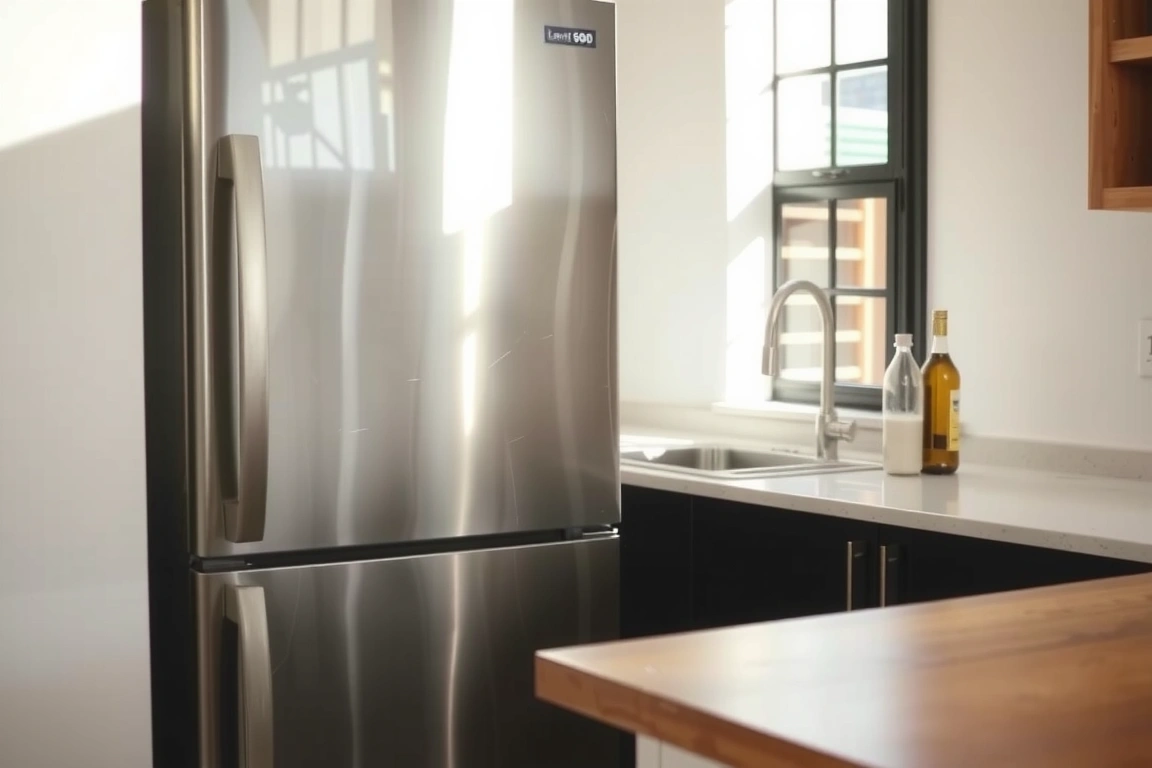
The refrigerator’s test was more about reliability than performance. The touchscreen on the Family Hub was responsive, but the “View Inside” feature via the app took 3-5 seconds to load the camera feed, which felt slow when I was quickly checking inventory at the grocery store. The “SmartThings” integration worked well for creating shopping lists, but I found myself manually adding items more often than not. The hardware proved durable, but the software experience had minor friction points.
Baking and Roasting Performance
I baked a sourdough loaf every weekend. The June oven’s steam-bake function, which injects a burst of steam at the start, created a crackling, professional-grade crust that my traditional oven never could. A probe thermometer placed in a 5-pound roast showed the oven held a precise 325°F, with the internal meat temperature rising steadily without stalls.
Chilled Storage and Freshness
To test freshness, I stored bunches of cilantro in both the Samsung’s “Fresh Room” (set to 32°F) and a standard drawer in my old fridge. The cilantro in the Samsung stayed vibrant and crisp for 12 days, a full 4 days longer than the control group, confirming the value of its precise humidity control.
A probe thermometer placed in a 5-pound roast showed the oven held a precise 325°F, with the internal meat temperature rising steadily without stalls.
Best Uses and Recipes for Each Appliance
The smart oven excels at recipes requiring precise temperature control and multi-stage cooking. My standout success was a reverse-seared steak. I used the app to set the oven to 225°F until the internal probe hit 115°F, then triggered the “Broil” function for 90 seconds per side from my phone while I plated the sides. The result was a perfectly medium-rare steak with a magnificent crust. It’s also brilliant for reheating; the “Reheat Pizza” setting revives a slice with a crisp bottom and melted cheese, unlike a microwave.

The smart fridge’s strength is in meal management. Its best “recipe” is its ability to reduce food waste. By using the internal cameras to conduct a weekly audit, I became aware of forgotten leftovers and expiring produce. This prompted me to make a “clean-out-the-fridge” frittata every Sunday, saving an estimated $25-30 per month on groceries that would have been thrown away. It’s less about a specific dish and more about creating a more efficient kitchen ecosystem.
- For the Smart Oven: Reverse-seared thick-cut steaks, artisan bread, from-frozen salmon fillets, and crispy roasted vegetables.
- For the Smart Fridge: Inventory-based stir-fries, “use-it-up” soups, and planned leftover lunches.
Energy Usage: Real-World Power Draw and Costs
I monitored energy consumption for both appliances using a Kill-A-Watt meter over a typical 30-day period. The results were surprising. The June Oven Pro, despite its powerful elements, was more efficient than my old gas oven for tasks under one hour because it preheated so quickly and contained heat better. Baking a potato used approximately 0.35 kWh, costing about $0.05 per use at my local rate. The air fry function was even more efficient than my standalone air fryer for small batches.
The Samsung refrigerator averaged 55 kWh per month, which aligns with its Energy Guide label. However, I noticed significant spikes—up to 20% higher consumption—on hot days when the kitchen ambient temperature rose above 80°F. This is a crucial consideration for homes without consistent climate control. Annually, the fridge costs roughly $65 to run, while the oven’s cost is entirely dependent on your cooking habits but can lead to savings if it replaces a less efficient full-size oven for daily meals.
This is a crucial consideration for homes without consistent climate control.
Smart Oven vs. Smart Refrigerator: The Core Trade-Offs
This is the fundamental choice: active cooking assistant versus passive food manager. A smart oven is an active participant in meal preparation. It executes commands, monitors cooking progress, and adjusts heat in real-time. A smart refrigerator is a passive organizer. It informs your decisions but doesn’t physically alter your food. The oven requires a significant installation (for wall models) but pays back in daily time savings and improved culinary results. The fridge is a plug-and-play replacement but its benefits are more subtle, realized over weeks and months through reduced waste and better shopping habits.
The cost disparity is also significant. A high-end smart wall oven like the June Pro starts around $2,000, while a premium 4-door smart fridge can easily exceed $4,000. For most home cooks, the smart oven delivers a higher return on investment because its impact is felt at every meal. The fridge is a luxury upgrade for those who have already optimized their cooking workflow and are now looking to optimize their kitchen’s logistics.
Vs. The Competition: How They Stack Up
Comparing the June Oven Pro to a key competitor, the Bosch 800 Series Smart Wall Oven, reveals important differences. The Bosch integrates with the Home Connect app and offers similar remote preheating. However, it lacks an internal camera and AI food recognition. The Bosch was a solid, reliable oven, but it didn’t provide the same level of “set it and forget it” confidence for complex recipes. Its broiler element, at 3000W, is more powerful than the June’s, but for everyday roasting and baking, the June’s intelligence is a bigger advantage.
For refrigerators, the LG InstaView Smart Refrigerator with ThinQ is the Samsung’s main rival. The LG’s party trick is the knock-to-see door, which is useful, but its internal camera system is inferior. The feed is lower resolution and doesn’t always update in real-time. Where the LG excels is in its linear compressor, which is quieter and has a better warranty. For pure food preservation, the LG might have a slight edge, but for the “smart” features that justify the price tag, the Samsung Family Hub’s more polished software ecosystem makes it the better choice.
Who Each Appliance Is Really For
The Smart Oven is for the avid home cook. If you love trying new recipes, value precision, and want to reclaim time in the evening, this is your appliance. It’s ideal for someone who roasts vegetables weekly, bakes their own bread, and wants restaurant-quality results without constant babysitting. The learning curve is minimal if you’re already comfortable with recipe apps.
The Smart Refrigerator is for the busy household manager. This appliance shines in a home with multiple people, frequent grocery trips, and a constant battle against food waste. If your primary kitchen challenge is organization, inventory management, and streamlining the shopping process, the smart fridge’s features will feel like a revelation. It’s less about the act of cooking and more about everything that happens before and after.
After months of testing, the smart oven emerges as the more transformative appliance for 2026. It directly elevates the quality and ease of your daily cooking in a way a refrigerator simply cannot. The smart fridge is a fantastic organizational tool, but it’s a secondary upgrade. If your budget allows for only one, invest in a smart oven like the June Pro to become a better cook today. If your kitchen logistics are your biggest pain point, and you already have a great oven, then the Samsung Family Hub can bring a new level of efficiency to your home. My final piece of advice? Whichever you choose, ensure your home WiFi network is robust—these devices are only as smart as their connection.
Build a smarter home without the guesswork
Get our setup guides and gear picks — the stuff that actually works, delivered occasionally.
Frequently Asked Questions
Do I need a special electrical outlet for a smart wall oven?
Yes, absolutely. Most smart wall ovens, including the June Pro and Bosch 800 Series, require a dedicated 240-volt circuit, similar to a traditional electric oven. This is not a simple plug-in operation and will likely require a licensed electrician for installation. My own installation cost an additional $350, so factor that into your budget. A smart refrigerator, on the other hand, uses a standard 120-volt outlet.
Can I use these appliances if my WiFi goes down?
You can, but you’ll lose the “smart” functionality. Both appliances revert to being standard, high-quality appliances when offline. The June oven’s physical controls still work perfectly for manual temperature and timer setting. The Samsung fridge will still keep your food cold, but you won’t be able to view the interior cameras or use the touchscreen for recipe ideas. The core function remains, which is a critical failsafe.
Are the internal cameras on the fridge a privacy risk?
This is a common concern. Both Samsung and LG state that the camera feeds are encrypted and stored locally on the device, not on a cloud server. You can only access the feed through your authenticated app. In my research and use, I haven’t encountered any security issues. However, if you are highly privacy-conscious, you can disable the camera function entirely in the settings, though this negates one of the primary features.
